












Monday, February 9, 2026
ISSN 2765-8767
  • Survey
  • Podcast
  • Write for Us
  • My Account
  • Log In
Daily Remedy
  • Home
  • Articles
  • Podcasts
    The Future of LLMs in Healthcare

    The Future of LLMs in Healthcare

    January 26, 2026
    The Future of Healthcare Consumerism

    The Future of Healthcare Consumerism

    January 22, 2026
    Your Body, Your Health Care: A Conversation with Dr. Jeffrey Singer

    Your Body, Your Health Care: A Conversation with Dr. Jeffrey Singer

    July 1, 2025

    The cost structure of hospitals nearly doubles

    July 1, 2025
    Navigating the Medical Licensing Maze

    The Fight Against Healthcare Fraud: Dr. Rafai’s Story

    April 8, 2025
    Navigating the Medical Licensing Maze

    Navigating the Medical Licensing Maze

    April 4, 2025
  • Surveys

    Surveys

    AI in Healthcare Decision-Making

    AI in Healthcare Decision-Making

    February 1, 2026
    Patient Survey: Understanding Healthcare Consumerism

    Patient Survey: Understanding Healthcare Consumerism

    January 18, 2026

    Survey Results

    Can you tell when your provider does not trust you?

    Can you tell when your provider does not trust you?

    January 18, 2026
    Do you believe national polls on health issues are accurate

    National health polls: trust in healthcare system accuracy?

    May 8, 2024
    Which health policy issues matter the most to Republican voters in the primaries?

    Which health policy issues matter the most to Republican voters in the primaries?

    May 14, 2024
    How strongly do you believe that you can tell when your provider does not trust you?

    How strongly do you believe that you can tell when your provider does not trust you?

    May 7, 2024
  • Courses
  • About Us
  • Contact us
  • Support Us
  • Official Learner
No Result
View All Result
  • Home
  • Articles
  • Podcasts
    The Future of LLMs in Healthcare

    The Future of LLMs in Healthcare

    January 26, 2026
    The Future of Healthcare Consumerism

    The Future of Healthcare Consumerism

    January 22, 2026
    Your Body, Your Health Care: A Conversation with Dr. Jeffrey Singer

    Your Body, Your Health Care: A Conversation with Dr. Jeffrey Singer

    July 1, 2025

    The cost structure of hospitals nearly doubles

    July 1, 2025
    Navigating the Medical Licensing Maze

    The Fight Against Healthcare Fraud: Dr. Rafai’s Story

    April 8, 2025
    Navigating the Medical Licensing Maze

    Navigating the Medical Licensing Maze

    April 4, 2025
  • Surveys

    Surveys

    AI in Healthcare Decision-Making

    AI in Healthcare Decision-Making

    February 1, 2026
    Patient Survey: Understanding Healthcare Consumerism

    Patient Survey: Understanding Healthcare Consumerism

    January 18, 2026

    Survey Results

    Can you tell when your provider does not trust you?

    Can you tell when your provider does not trust you?

    January 18, 2026
    Do you believe national polls on health issues are accurate

    National health polls: trust in healthcare system accuracy?

    May 8, 2024
    Which health policy issues matter the most to Republican voters in the primaries?

    Which health policy issues matter the most to Republican voters in the primaries?

    May 14, 2024
    How strongly do you believe that you can tell when your provider does not trust you?

    How strongly do you believe that you can tell when your provider does not trust you?

    May 7, 2024
  • Courses
  • About Us
  • Contact us
  • Support Us
  • Official Learner
No Result
View All Result
Daily Remedy
No Result
View All Result
Home Politics & Law

Vaccine Diplomacy

Daily Remedy by Daily Remedy
August 8, 2021
in Politics & Law
0

“Empires have no interest in operating within an international system; they aspire to be the international system”, wrote Henry Kissinger, the famed Cold War ambassador to President Nixon and adviser to countless presidents ever since.

Kissinger was writing about empires in history, particularly in reference to the growing threat that Russia, formerly the USSR, presented to Eastern Europe in the mid-twentieth century.

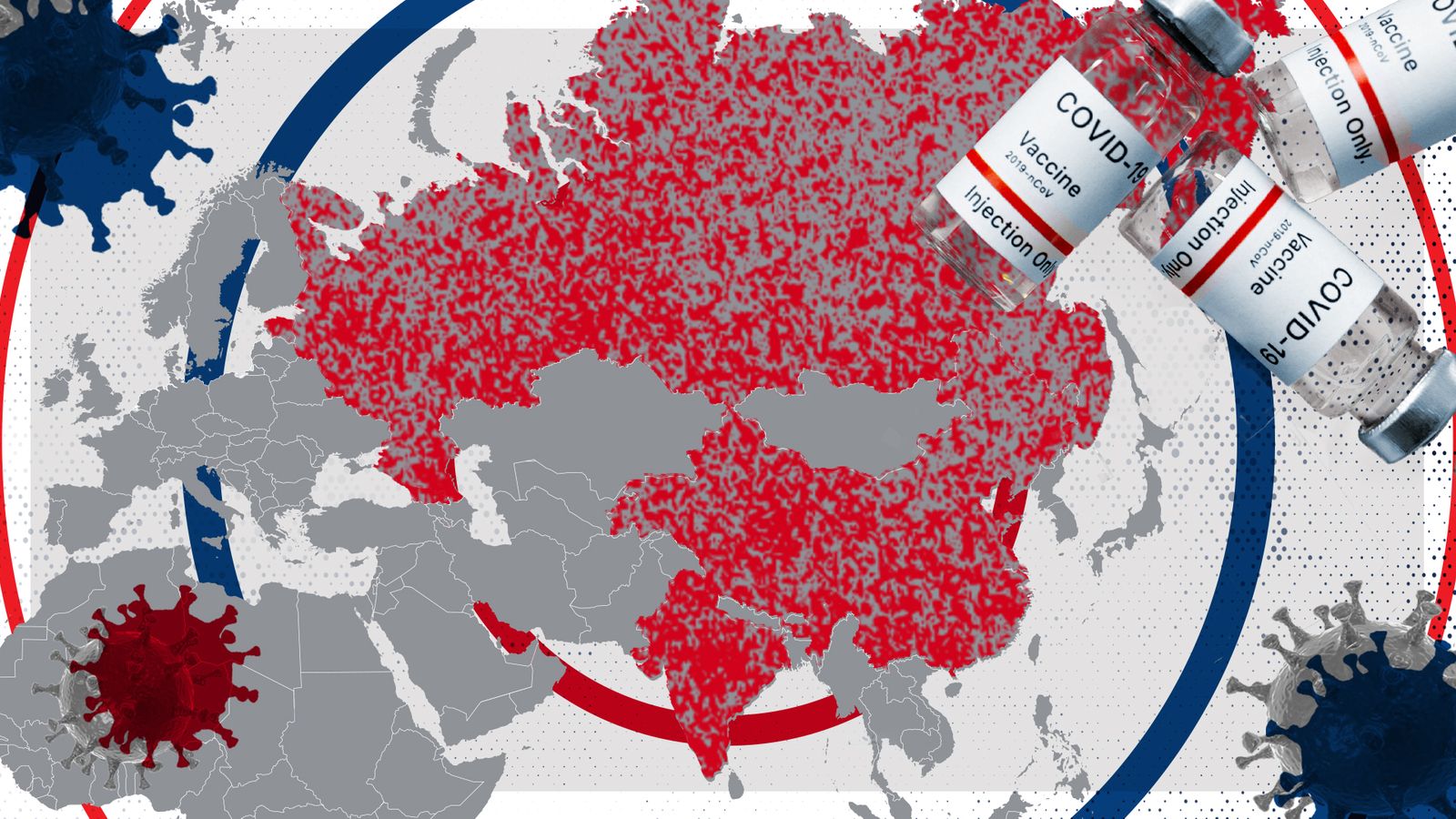
But the quotation applies just as well today, in the post-pandemic era in which the same power players are, once again, jockeying for international dominance. But instead of fighting through theoretical frameworks of government – capitalism versus communism – these power players are fighting with vaccine supplies.

Setting the stage for a diplomatic battle that will define the new geopolitical order post-pandemic.

Recently the United States pivoted its stance from hoarding excess vaccines to disseminating them across various geographies. While around half of all Americans have had at least one dose, less than a single percentage of people in low-income countries have been vaccinated.

Most of these countries have turned to Russia and China, the world’s second leading producer of vaccines after the United States, for vaccine supplies. But now that Americans seem to have capped off the total number of vaccinations they are willing to receive, the United States is setting its sights international.

President Biden now has a choice – either send vaccines directly to individual countries, or send share bulk vaccine supplies through the WHO-backed COVAX initiative – or, what White House officials indicate is most likely – pursue some combination of the two.

Which makes the most sense, as all things pandemic are political, even the dissemination of life-saving vaccines. Pursuing a hybrid distribution model allows the United States to exert political control over particular nations of interest while maintaining a semblance of international leadership in propping the WHO.

The best of both worlds, figuratively. But in a world literally ravaged by a pandemic, many have advised President Biden to target countries most severely affected by the pandemic. Dr. Zeke Emanuel, who served on the President Biden’s COVID-19 advisory board during the presidential transition, argues that vaccines should be shipped to where they are most needed and most readily distributed, not through the WHO-backed COVAX population-based system.

The science in all this can be a bit tricky, and decision-making – as we saw over and over during the pandemic – often resorts to making subjective judgments regarding the objective data. It makes sense long-term to distribute vaccines based upon the general distribution of populations. But it also makes sense short-term to distribute vaccines to regions more critically affected than others.

Even within a short-term frame of reference, discerning what regions are more critically affected also becomes subjective. Some point to traditional epidemiological metrics like infectivity rate or more granular metrics of population spread. While others focus on economic constraints like the total number of hospitals or total oxygen supply.

The time horizon, and the metrics of focus determine the order of prioritization. The pandemic is, as it has always been, less about the data and more about the perception of the data.

How the Biden administration frames the clinical need for each country will determine how many vaccines it will distribute.

It is an inherently subjective decision, rife with uncertainty. And like all subjective decisions made in the political arena, ulterior motives will inevitably arise.

While Biden has said vaccine donations will be driven by science and not geopolitics, there are clear soft power political advantages to distributing the vaccines to certain countries and regions over others.

Latin America has received more vaccines from China, Russia, India, and even Israel than from the United States or through direct sales contracts from Pfizer. A region traditionally controlled geopolitically by the United States – that perhaps China is eyeing in order to increase its influence in the region. Something Psaki warned of in stating that Russia and China could use vaccines to build leverage over other countries.

But now that the United States has entered the international game of vaccine diplomacy, we should observe closely how the vaccines are distributed – and the inevitable jockeying of vaccine distribution rights in regions across the world. The distribution will reflect our international interests, and which regions we consider of higher geopolitical importance.

For example, oil-rich Bahrain has seen poor COVID-19 control with China’s Sinopharm vaccine, and now advises its population to receive Pfizer’s vaccine – even among those vaccinated previously with China’s vaccine. A shift in vaccine distribution the United States is all too happy to accommodate, as the shift in vaccine sourcing reflects a shift in perception between China and the United States in Bahrain.

Yet Bahrain is far from the most afflicted region in the world. Many countries like Colombia and Brazil are battling more severe COVID-19 outbreaks, yet per population, have received fewer Pfizer vaccines than Bahrain.

Whether this is an economic issue – Bahrain has higher per capita income than most South American countries – or a political issue – Pfizer has been notoriously stingy in offering discounted rates of its vaccine – remains to be seen.

But it is quite telling that Colombia has been told it must wait until December to receive its request for vaccines, while Bahrain receives its supply of vaccines almost upon demand.

No matter how we conjecture, we cannot be certain how these distribution decisions are made, nor the true underlying intentions.

Like most diplomatic decisions, vaccine diplomacy is a game cloaked in secrecy, revealing itself only afterwards.

Leaving us, in the moment, to merely guess within the void of subjective uncertainty.

ShareTweet
Daily Remedy

Daily Remedy

Dr. Jay K Joshi serves as the editor-in-chief of Daily Remedy. He is a serial entrepreneur and sought after thought-leader for matters related to healthcare innovation and medical jurisprudence. He has published articles on a variety of healthcare topics in both peer-reviewed journals and trade publications. His legal writings include amicus curiae briefs prepared for prominent federal healthcare cases.

Leave a Reply Cancel reply

Your email address will not be published. Required fields are marked *

Videos

In this episode, the host discusses the significance of large language models (LLMs) in healthcare, their applications, and the challenges they face. The conversation highlights the importance of simplicity in model design and the necessity of integrating patient feedback to enhance the effectiveness of LLMs in clinical settings.

Takeaways
LLMs are becoming integral in healthcare.
They can help determine costs and service options.
Hallucination in LLMs can lead to misinformation.
LLMs can produce inconsistent answers based on input.
Simplicity in LLMs is often more effective than complexity.
Patient behavior should guide LLM development.
Integrating patient feedback is crucial for accuracy.
Pre-training models with patient input enhances relevance.
Healthcare providers must understand LLM limitations.
The best LLMs will focus on patient-centered care.

Chapters

00:00 Introduction to LLMs in Healthcare
05:16 The Importance of Simplicity in LLMs
The Future of LLMs in HealthcareDaily Remedy
YouTube Video U1u-IYdpeEk
Subscribe

AI Regulation and Deployment Is Now a Core Healthcare Issue

Clinical Reads

Ambient Artificial Intelligence Clinical Documentation: Workflow Support with Emerging Governance Risk

Ambient Artificial Intelligence Clinical Documentation: Workflow Support with Emerging Governance Risk

by Daily Remedy
February 1, 2026
0

Health systems are increasingly deploying ambient artificial intelligence tools that listen to clinical encounters and automatically generate draft visit notes. These systems are intended to reduce documentation burden and allow clinicians to focus more directly on patient interaction. At the same time, they raise unresolved questions about patient consent, data handling, factual accuracy, and legal responsibility for machine‑generated records. Recent policy discussions and legal actions suggest that adoption is moving faster than formal oversight frameworks. The practical clinical question is...

Read more

Join Our Newsletter!

Twitter Updates

Tweets by TheDailyRemedy

Popular

  • Powerful Phrases to Tell Patients

    Powerful Phrases to Tell Patients

    0 shares
    Share 0 Tweet 0
  • Positions Currently in High Demand in the Medical Field

    0 shares
    Share 0 Tweet 0
  • The Future of Healthcare Law

    0 shares
    Share 0 Tweet 0
  • Bird Flu’s Cattle Calling

    1 shares
    Share 0 Tweet 0
  • A Comment on the CDC’s Commentary

    0 shares
    Share 0 Tweet 0
  • 628 Followers

Daily Remedy

Daily Remedy offers the best in healthcare information and healthcare editorial content. We take pride in consistently delivering only the highest quality of insight and analysis to ensure our audience is well-informed about current healthcare topics - beyond the traditional headlines.

Daily Remedy website services, content, and products are for informational purposes only. We do not provide medical advice, diagnosis, or treatment. All rights reserved.

Important Links

  • Support Us
  • About Us
  • Contact us
  • Privacy Policy
  • Terms and Conditions

Join Our Newsletter!

  • Survey
  • Podcast
  • About Us
  • Contact us

© 2026 Daily Remedy

No Result
View All Result
  • Home
  • Articles
  • Podcasts
  • Surveys
  • Courses
  • About Us
  • Contact us
  • Support Us
  • Official Learner

© 2026 Daily Remedy
